.png)
Best Age to Start Abacus Training for Young Children
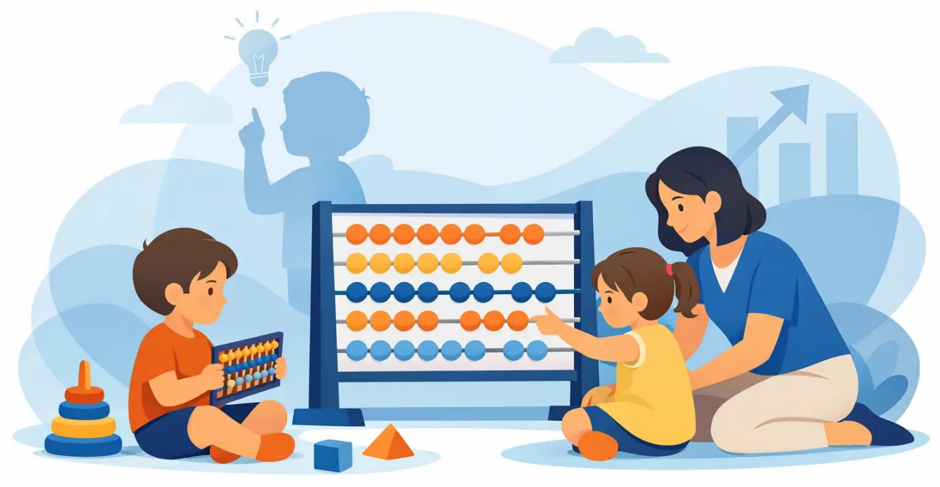
A three-year-old may not be ready to sit with worksheets for long, but they may be wonderfully ready to slide abacus beads, copy simple patterns and celebrate a correct answer. That is why the best age to start abacus is often earlier than parents expect. The right starting point is less about a child reaching a particular birthday but more about whether they are curious, comfortable with basic instructions and able to enjoy short, guided activities.
For many children, ages three to six are an excellent window for beginning abacus learning. Their brains are rapidly building connections, and hands-on experiences can make numbers feel real rather than abstract. With the right teaching approach, abacus can become a joyful first step toward confident mental arithmetic and a stronger love for learning.
What Is the Best Age to Start Abacus Training?
Most children can begin a well-designed abacus programme from age three onward. At this stage, the goal is not to rush a child into fast calculation. It is to help them recognise quantities, coordinate their fingers, listen carefully and connect movement with number sense.
An abacus gives young learners something they can see and touch. When a child moves beads to represent a number, they are not simply memorising a symbol on a page. They are building an early understanding that numbers have value, order and relationships. This physical experience creates a useful bridge to mental images and, later, rapid calculation without the tool.
Children between four and six often make especially visible progress because they are developing longer attention spans and stronger fine-motor control. They can follow more detailed instructions, practice regular number combinations and begin working through addition and subtraction with greater independence. Yet a motivated three-year-old can thrive too when lessons are playful, short and paced appropriately.
Starting later is also completely possible. Primary-school children can learn abacus skills effectively, especially if they need more confidence with arithmetic or would benefit from a more organised way to visualise numbers. They may move through basic concepts more quickly, but they still need time to build accuracy before chasing speed.
Readiness Matters More Than a Number
Parents sometimes worry that starting early will place too much pressure on a young child. That concern is valid. Early learning should never feel like a race. A child is ready for abacus when the experience matches their developmental stage and gives them reasons to feel successful.
A ready beginner can usually attend to a short activity, imitate a teacher or parent and respond to simple directions such as “show me three” or “move one bead.” They do not need to read fluently, write neatly or already excel in preschool maths. In fact, abacus can be a welcoming entry point for children who are still discovering how numbers work.
Watch for small signs of interest. Your child may enjoy counting stairs, sorting toys, singing number songs, matching shapes or asking questions about prices and clocks. These habits suggest that numbers are becoming part of how they explore the world. A structured abacus class can channel that curiosity into a skill that grows steadily over time.
On the other hand, a child who is very tired, distressed by group activities or unable to participate for even a few minutes may benefit from waiting a little while. Waiting is not falling behind. It simply allows the child to begin with a greater chance of enjoyment and confidence.
Why an Early Start Can Support Whole-Brain Learning
Abacus learning is more than getting answers quickly. When children use a two-hand, four-finger method, they coordinate visual attention, hand movements, listening and memory at the same time. This active process encourages children to concentrate, observe patterns and hold numerical information in their minds.
As skills develop, learners gradually move from physical beads to imagining the abacus. This transition is where mental arithmetic becomes exciting. A child begins to picture bead movements and calculate mentally with speed and accuracy. The journey takes practice, but the foundational work is meaningful: children learn that challenging tasks can become manageable through repetition and strategy.
An early start can also make formal school mathematics feel less intimidating. Children who have had positive experiences with numbers may approach addition, subtraction, multiplication and division with more willingness to try. They are not guaranteed to find every maths topic easy, but they have a familiar toolkit for staying engaged when problems become harder.
The best programmes balance structured progression with age-appropriate fun. Songs, music, games, visual activities and encouraging feedback are not distractions from learning. For young children, they are often how concentration and motivation are built. A child who enjoys practice is more likely to return to it consistently.
The Trade-Off Between Starting Early and Starting Ready
Beginning at age three offers more time to develop skills gradually. Young children can become comfortable with the abacus before school demands increase, and their learning can be shaped around play, routine and small achievements. This is particularly valuable for families who want to nurture a strong numerical foundation from the preschool years.
However, a younger beginner needs a gentler pace. Expect short practice sessions, frequent encouragement and plenty of repetition. Progress may look like improved focus, better finger control or growing comfort with numbers before it looks like rapid calculations.
Beginning at five, six or in primary school may bring a different advantage. Older children can often understand rules faster and handle longer practice periods. They may be eager to improve their classroom performance, check answers more efficiently or take on more complex problem sums. The trade-off is that they may need to unlearn anxiety around maths or slow counting habits that have already become familiar.
Neither path is automatically better. The best choice is the one that lets your child build skills without feeling overwhelmed. Consistent, happy practice matters far more than an early start date alone.
How Parents Can Make the First Months Count
Once a child begins, regular reinforcement helps turn new movements into lasting habits. This does not require long home lessons. For preschoolers, even five to 10 focused minutes can be valuable when done consistently and with a positive tone. Ask your child to show you what they learned, let them explain a bead movement and praise effort as well as correct answers.
Try not to compare progress with siblings, classmates or online videos of exceptionally-fast calculators. Speed is an outcome of secure understanding and repeated practice, not the first goal. A child who carefully builds accuracy, concentration and confidence is creating the right foundation for faster mental work later.
It also helps to choose a programme with a clear learning pathway. Beginners need to know what comes next, while parents need confidence that lessons are progressing beyond simple counting. A thoughtful curriculum should guide children from abacus familiarity to the four mathematical operations, mental calculation and practical problem-solving at a pace suited to their age and level.
At Mentalmatics, children can begin from age three and progress through structured abacus and mental arithmetic learning with engaging activities that make challenging skills feel achievable. The aim is not merely to produce quick answers. It is to nurture little geniuses who approach numbers with focus, resilience and genuine enjoyment.
When to Consider a Trial Class
A trial class can be especially helpful when you are unsure whether your child is ready. Rather than guessing based on age, you can observe how they respond to the teacher, materials and rhythm of the lesson. Do they light up when moving the beads? Can they settle after a few minutes? Are they proud when they complete a small task?
A good first experience should leave a child feeling capable, even if the material is new. They do not need to master everything immediately. They simply need a supportive place to begin.
The best age to start abacus is the age when your child can meet numbers with curiosity and receive the right guidance to grow. Whether that begins at three, five or later in primary school, a patient start can help mathematics become something your child is excited to explore.
How Mentalmatics Can Help
At Mentalmatics, children are welcomed from as young as age three, which is precisely the window this article identifies as optimal for building lasting numerical foundations. Structured levels guide each child at a pace suited to their readiness, with songs, games and encouraging activities ensuring that early learning feels joyful rather than pressured. The goal is not simply fast calculation, but confident, resilient little learners who approach numbers with genuine curiosity. A trial class is the ideal first step for families wondering if their child is ready to begin.
If you are ready to take the first step, talk to us or register for a trial class using the link below!


Comments